The global fuel crisis has entered another concerning phase. After falling below US$100 per barrel during the middle of the year, oil prices have risen sharply again. Brent crude is now trading above US$100 per barrel as continuing conflict in the Middle East, disruption to critical shipping routes and damage to energy infrastructure place renewed pressure on global oil supplies. The issue is increasingly not simply the price of oil. It is the amount of oil and refined fuel that can reliably reach global markets.
Global oil supply remains constrained
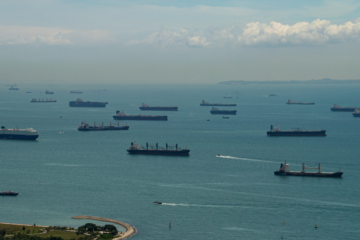
The Strait of Hormuz, normally responsible for the movement of around one-fifth of the world’s oil and gas supplies, remains severely disrupted. Oil flows through the Strait have fallen dramatically from pre-conflict levels.
The Red Sea, which had provided an important alternative route, is also under increasing pressure. Continuing Houthi activity around the Bab el-Mandeb Strait has increased the risks associated with shipping through the region.
Compounding the situation, Saudi Arabia’s East–West pipeline – an important alternative for moving oil from the Persian Gulf to Red Sea export terminals without using the Strait of Hormuz – has been damaged by drone attacks and temporarily shut down. The problem is no longer confined to the Middle East.
Ukraine continues to target Russian oil production and refining infrastructure. These attacks have reduced Russian production and refining capacity and contributed to tighter global supplies of refined fuels, particularly diesel. The result is a global oil market being squeezed from several directions simultaneously.
Price may not be the only problem
Reduced supply inevitably places upward pressure on prices. However, there is another risk that Australian governments, councils and essential service providers need to consider – availability. Australia remains heavily dependent on imported crude oil and refined petroleum products, particularly diesel.
If global supplies become increasingly constrained, the issue may no longer simply be whether essential service providers can afford higher fuel prices. It may become whether sufficient petrol and diesel are available when and where they are required. This creates a very different operational challenge.
Councils, water authorities and other essential service providers operate vehicle fleets and plant that support waste collection, road maintenance, water and wastewater services, emergency response, parks maintenance, construction and many other essential community services.
If fuel availability becomes constrained, organisations may need to prioritise available fuel for critical services while reducing, postponing or temporarily withdrawing lower-priority service delivery and activities. That makes fuel security a service and business continuity issue.
Australia’s transition to electric vehicles continues
Against this backdrop, Australians continue to reduce their exposure to petrol and diesel. August produced another significant milestone for Australia’s vehicle market. Battery electric vehicles accounted for approximately 25% of all new vehicle sales, with more than 27,000 BEVs sold during the month.
For the first time, battery electric vehicles overtook petrol vehicles as Australia’s largest individual new-vehicle fuel type. When BEVs, plug-in hybrids and conventional hybrids are combined, electrified vehicles represented more than half of Australia’s new vehicle market.
The economics of the transition are also changing. Every increase in petrol and diesel prices strengthens the operating-cost advantage of electric vehicles and reduces exposure to volatile international oil markets.
Building resilience into essential services
There is an important lesson here for councils, water authorities and other essential service providers. Fleet electrification should no longer be viewed solely through the lens of achieving net-zero emissions. It is increasingly about business continuity and organisational resilience.
Transitioning suitable passenger vehicles, utilities, vans, small trucks and other fleet assets to electricity progressively reduces an organisation’s exposure to imported liquid fuels. But the greatest resilience opportunity comes from integrating fleet electrification with the organisation’s broader energy strategy. Depots and major operational facilities can progressively become energy hubs, combining:

Solar generation allows organisations to produce part of their own transport energy. Battery storage allows that energy to be stored, managed and used when it provides the greatest operational and financial benefit. Smart charging allows fleet demand to be aligned with available electrical capacity and lower-cost periods.
This does not eliminate energy risk, nor can every vehicle or item of plant currently be electrified. Diesel will remain critical to many heavy-duty and specialised operations for some time.
But every suitable vehicle transitioned away from petrol or diesel reduces the organisation’s exposure to global oil markets.
Dependent on imported fossil fuels
With oil again above US$100 per barrel, the Strait of Hormuz severely constrained, Red Sea shipping under increasing threat, Saudi oil infrastructure damaged and Russian production and refining capacity being disrupted, the risks associated with global oil dependence are becoming increasingly apparent.
Councils, water authorities and other essential service providers cannot control international conflicts or global oil markets. They can, however, control how exposed their organisations are to them.
Fleet electrification, charging infrastructure, rooftop solar and battery storage should increasingly be considered not simply as environmental investments, but as investments in financial resilience, energy security and continuity of business and essential community services.
About Us
Since 2014, Ravim RBC has specialised in helping councils of all sizes across Australia improve service delivery through strategic service planning and service reviews.
Recognising that many council services rely on fleet, plant and equipment, we have developed extensive expertise in fleet management, fleet optimisation and the transition to low-emission fleets. We also partner with Uniqco to deliver independent fleet audits, maturity assessments and reviews that improve operational performance, financial sustainability and asset utilisation.
Our Principal, John Ravlic, brings more than 40 years of executive leadership and consulting experience in local government. Having worked with councils across Australia, John combines strategic insight with practical experience to help organisations deliver efficient, sustainable and community-focused services.
0 Comments