Current Position
The fuel crisis arising from the Iran conflict has eased from its initial peak, but it has not been resolved. The Strait of Hormuz remains physically navigable (depending on the time of day) although tanker movements are substantially below normal levels and subject to competing claims of control, vessel attacks, higher insurance costs and changing transit arrangements.
Renewed hostilities during July have demonstrated how quickly an apparent stabilisation can unravel. The Strait should therefore be regarded as operationally constrained rather than securely open. While crude oil prices have moderated from their crisis peaks, refined petrol and diesel markets remain tight and vulnerable to further interruption.
Australia has so far avoided sustained national fuel shortages. Government intervention, additional regional shipments, diversified sourcing and the use of available inventories have maintained supply. However, this relative resilience should not be mistaken for immunity. Australia remains dependent on imported refined petroleum products and is exposed to the reliability of Asian refineries, shipping routes and global fuel markets.
How Australia’s Neighbours Have Been Affected
The effects have generally been more severe across lower- and middle-income Asian economies, where fuel, food and transport account for a larger share of household expenditure, and governments have less fiscal capacity to absorb prolonged price increases.
Countries across Asia have adopted measures resembling parts of the COVID response. These have included working-from-home arrangements, shorter public-sector working weeks, restrictions on official travel, fuel-purchase limits, school closures, additional public holidays, and campaigns encouraging reduced energy use and greater reliance on public transport.
In some countries, motorists have experienced fuel queues, rationing and restrictions on the volume of fuel that can be purchased. Public transport operators, taxi drivers, farmers, fishing businesses and small freight operators have faced immediate increases in operating costs. Where fares and prices could not be increased sufficiently, services have been reduced or incomes have fallen.
The fuel shock has also flowed rapidly into food prices. Diesel is used throughout agricultural production and food distribution, while higher energy costs affect irrigation, fertiliser, refrigeration, processing and retail logistics. For lower-income households, the practical consequences have included reduced discretionary travel, less spending on food and other essentials, and greater difficulty travelling to work or school.
Governments including Indonesia, Malaysia, Thailand, Vietnam and the Philippines have used subsidies, price controls and stabilisation funds to contain retail fuel prices. These measures have protected households in the short term but have transferred substantial costs to government budgets. Prolonged support will increasingly compete with spending on infrastructure, health, education and other public services.
Japan has provided substantial financial support to restrain petrol prices, while South Korea has promoted energy conservation and considered restrictions on public-sector vehicle use. Singapore has focused more heavily on efficiency, demand reduction and targeted assistance rather than broad fuel subsidies.
The regional experience demonstrates that a fuel crisis does not remain confined to petrol stations. It becomes a transport, food-security, inflation, employment and government-budget problem.
Australia’s Position
Australia experienced sharp petrol and diesel price increases during the initial phase of the crisis, along with temporary local shortages and reports that hundreds of service stations had exhausted diesel supplies. Nevertheless, the national supply system continued operating and widespread rationing was avoided.
The Commonwealth initially introduced a three-month fuel-excise reduction of 32 cents per litre and temporarily reduced the heavy-vehicle road-user charge to zero. This provided material relief to households, businesses, freight operators and councils, and moderated the extent to which the international fuel shock was passed through at the bowser.
From 1 July 2026, the Government began tapering the assistance. A reduced concession of 16 cents per litre applies until 2 August 2026. On current policy settings, the remaining relief will then expire, exposing motorists and organisations to the full fuel-excise rate unless a further extension is announced.
The partial restoration of excise has already placed some upward pressure on Australian retail prices. This means that recent price increases cannot be attributed entirely to renewed Middle East instability. The domestic price is now being influenced by three separate factors:
- Global crude oil and refined-fuel prices;
- The Australian dollar and regional freight and refining costs; and
- The progressive withdrawal of the temporary excise concession.
The excise arrangements have therefore shifted from crisis relief to a staged return to normal taxation. Even if international oil prices remain broadly stable, the removal of the remaining 16-cent concession would produce another identifiable increase at the bowser, subject to normal retail pricing movements.
Continuing Risks
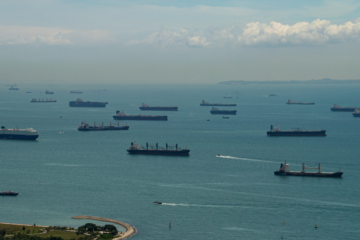
The principal risk is that renewed conflict further constrains shipping through the Strait of Hormuz. Recent tanker traffic has fallen to a fraction of normal levels, and some vessels are travelling without publicly visible tracking, undertaking ship-to-ship transfers or avoiding the route altogether.
The refined-fuel market may be more vulnerable than crude oil prices alone suggest. Global diesel and petrol inventories remain tight, refining margins are elevated and interruptions elsewhere (including restrictions affecting Russian diesel exports) are adding pressure to international product markets.
For Australia, a prolonged disruption could result in delayed shipments, greater competition for uncontracted fuel cargoes, higher freight and insurance costs, renewed local shortages and another sharp price increase. These impacts would flow into groceries, construction, waste collection, agriculture, freight, and council operations.
Implications for Councils
Councils should not interpret the recent period of relative stability as evidence that the fuel risk has passed. The operating environment remains volatile, and the staged withdrawal of excise relief creates an additional source of cost escalation.
Councils should continue monitoring fuel expenditure and supply arrangements, modelling the effect of the remaining excise concession expiring, and maintaining protocols that prioritise available fuel for essential services. Capital works and road-maintenance budgets should also be reviewed because diesel, bitumen, freight and contractor costs remain exposed to renewed market disruption.
The broader regional experience reinforces the value of accelerating fleet electrification, charging infrastructure, solar generation and battery storage where operationally and financially viable. These investments should increasingly be viewed not only as emissions-reduction initiatives, but as measures that strengthen financial resilience and reduce exposure to imported fuel markets.
Conclusion
Australia has managed the fuel crisis more effectively than many of its Asian neighbours, supported by stronger fiscal capacity, regional supply relationships and temporary fuel excise relief. In parts of Asia, the same crisis has resulted in fuel rationing, restricted travel, reduced public services, higher food prices and significant pressure on household and government budgets.
Australia’s position, however, remains fragile rather than secure. Recent military activity in and around the Strait of Hormuz has once again pushed global oil prices higher, demonstrating how quickly market confidence can be undermined by renewed conflict. While Australia has largely avoided fuel supply disruptions in recent weeks, the Strait remains operationally constrained, regional fuel markets remain tight, and the remaining fuel excise relief is scheduled to expire on 2 August 2026.
Should the conflict continue or further escalate, Australia is likely to experience renewed upward pressure on petrol and diesel prices, adding to inflation and cost-of-living pressures across the economy. For councils, this would mean higher fleet operating costs, increased contractor and construction costs, greater pressure on road maintenance and capital works programs, and difficult decisions regarding service delivery within already constrained budgets.
The experience of Australia’s Asian neighbours demonstrates that fuel security is no longer simply an energy issue—it is an economic resilience issue. Councils that actively reduce their dependence on imported liquid fuels through fleet electrification, charging infrastructure, renewable energy and battery storage will be better positioned to manage future fuel shocks while maintaining essential community services.

0 Comments