“By introducing the Fair Go Rates system, the Andrews Labor Government
is delivering on its commitment to cap council rate rises and protect
Victorian households from uncontrolled hikes.”
Then Minister for Local Government Natalie Hutchins
When the Fair Go Rates system was introduced, the then Minister for Local Government stated that the reform would “protect Victorian households from uncontrolled hikes” in council rates. This suggests that councils were imposing excessive and unrestrained increases, and that intervention was necessary to shield households from this behaviour.
Rate increases, while sometimes significant, were not “uncontrolled” in the sense implied. They reflected the cost of delivering services, maintaining infrastructure and responding to community expectations.
Background
Following the 2014 election, the Victorian Government led by Daniel Andrews introduced a system of rate capping for local government. The legislation underpinning the policy was passed in 2015, establishing the “Fair Go Rates System”, with annual rate caps first applying in the 2016/17 financial year. The cap is determined annually by the Minister for Local Government, based on advice from the Essential Services Commission.
The policy represented a fundamental shift in the financial framework of Victorian local government. For the first time, councils were no longer able to determine their own rate revenue growth without state approval. Instead, increases in general rates were limited to a government-determined cap unless councils applied for a formal variation through the regulator.
Cost-of-Living Pressures
The Victorian Government views rate capping as a way to protect residents from significant increases in property rates, which could exacerbate cost-of-living challenges. By enforcing a cap, the government can present itself as safeguarding household budgets. If that is the case, why single out local government? Afterall council rates are not the only bills households have to pay. Why not cap other bills causing cost-of-living pressure on households? If the objective is to comprehensively manage cost-of-living pressures, then focusing solely on council rates addresses only a small part of the issue.
Other household costs (many of which have grown more rapidly in recent years) are managed through different policy tools, or in some cases household costs are a function of international market dynamics and not constrained at all.
Rates Are Not the Outlier
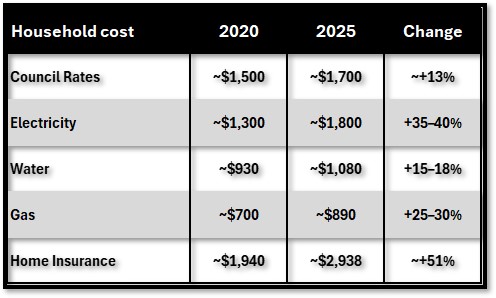
It is often assumed that council rates were increasing at an unsustainable pace prior to the introduction of the Fair Go Rates system. However, when rate movements are plotted alongside other household costs, a different picture emerges.
In the decade prior to rate capping, council rates increased by an average of around six per cent per annum. When viewed in isolation, this may appear high. Yet when compared with the movement in other household expenses (such as electricity, gas, water and insurance) this level of rate increase does not stand out as unusual.
Over the same period, many household costs were subject to similar or greater upward pressure, driven by factors such as infrastructure investment, regulatory changes and market dynamics. More recently, this trend has become even more pronounced, with electricity and insurance costs increasing at significantly higher rates than council rates.
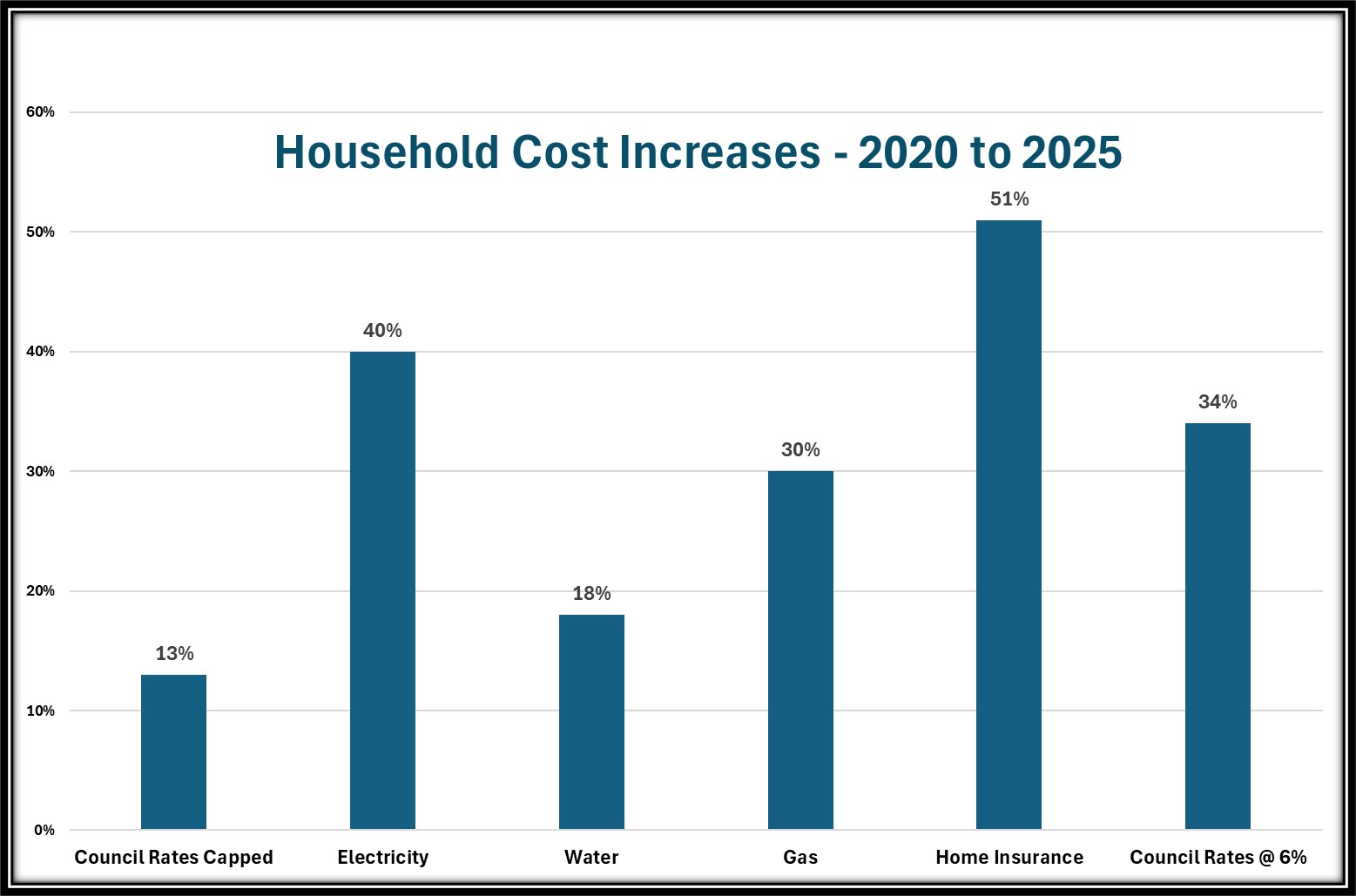
When placed in this broader context, council rates were not the outlier they are often portrayed to be. Rather, they were moving broadly in line with other essential household costs.
This raises an important question for policy makers. If council rates were not materially out of step with other household expenses, what problem was rate capping designed to solve?
Conclusion
Rate capping represents a targeted intervention in one of the few areas of household expenditure that governments can directly control. However, it raises a broader question as to whether constraining local government revenue is the most effective way to address cost-of-living pressures, particularly when other household costs have increased at a much faster rate.
About Ravim RBC
Ravim RBC is a strategic consultancy assisting councils around Australia with service planning and conducting service reviews. Since 2014 our consultants have been shaping council services to align with community needs and expectations and preparedness to pay.

0 Comments