When governments seek to improve the financial sustainability of organisations, they typically introduce measures that encourage greater efficiency and cost discipline. These reforms often focus on improving productivity, rationalising services or restructuring organisations so that they can operate more efficiently.
The Fair Go Rates system adopted a very different approach.
Rather than focusing on structural reforms designed to reduce the cost of delivering local government services, the policy primarily addressed the revenue side of the equation by limiting the growth in councils’ primary revenue source. In effect, the system imposed a constraint on how much revenue councils could raise each year without first addressing the cost drivers embedded within the sector.
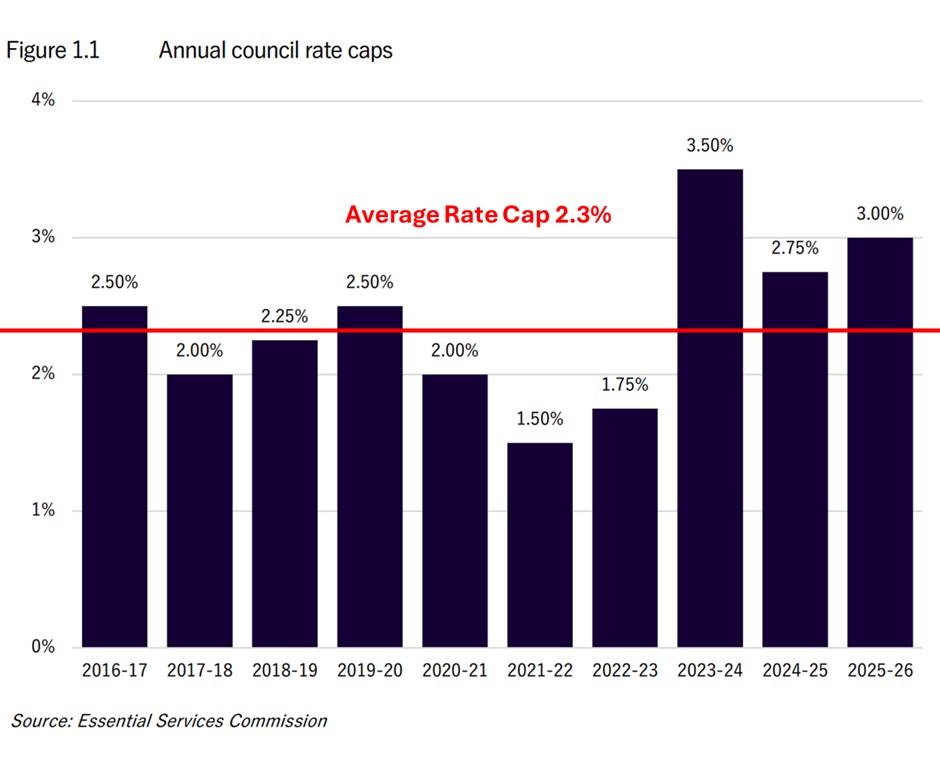
For many years prior to the introduction of the Victorian rate cap, council rate revenue increased by an average of around 6% annually. Under the rate-capping framework, annual increases have typically been limited to between 2-3%. This represents a significant reduction in the sector’s revenue growth trajectory. The average rate cap over the last decade has been 2.3%.
The introduction of the cap was not accompanied by a comparable program of reforms designed to reduce the cost of delivering services. There was no comprehensive review of council service portfolios, no structured program encouraging service rationalisation, and no sector-wide initiative aimed at improving productivity through structural change.
In the absence of such reforms, councils have largely continued to deliver the same range of services and maintain the same infrastructure networks while operating within a much tighter revenue environment. Where revenue growth slows but service obligations remain unchanged, financial pressure inevitably emerges elsewhere within the organisation.
Over time this pressure tends to appear through a combination of declining operating surpluses, the gradual drawdown of financial reserves, and in some cases, increased borrowing to fund capital works.
A typical reform pathway would have involved pairing the introduction of rate capping with measures designed to help councils adjust their cost structures. This could have included:
- encouraging structured service planning
- promoting shared services between councils
- reviewing the allocation of responsibilities between levels of government
- examining the scale and structure of the sector itself.
Without these complementary reforms, the Fair Go Rates system operates primarily as a mechanism that constrains revenue growth rather than one that improves the financial sustainability of local government.
After almost a decade of operation, this distinction becomes increasingly important. If the policy is to continue into the future, the focus may need to shift from simply limiting revenue growth to addressing the structural cost drivers that influence how local government services are delivered.
About Ravim RBC
Ravim RBC is a strategic consultancy assisting councils around Australia with service planning and conducting service reviews. Since 2014 our consultants have been shaping council services to align with community needs and expectations and preparedness to pay.



0 Comments